The Cemetery Research Group aims to expand an understanding of current and past funeral culture in the UK and around the world.

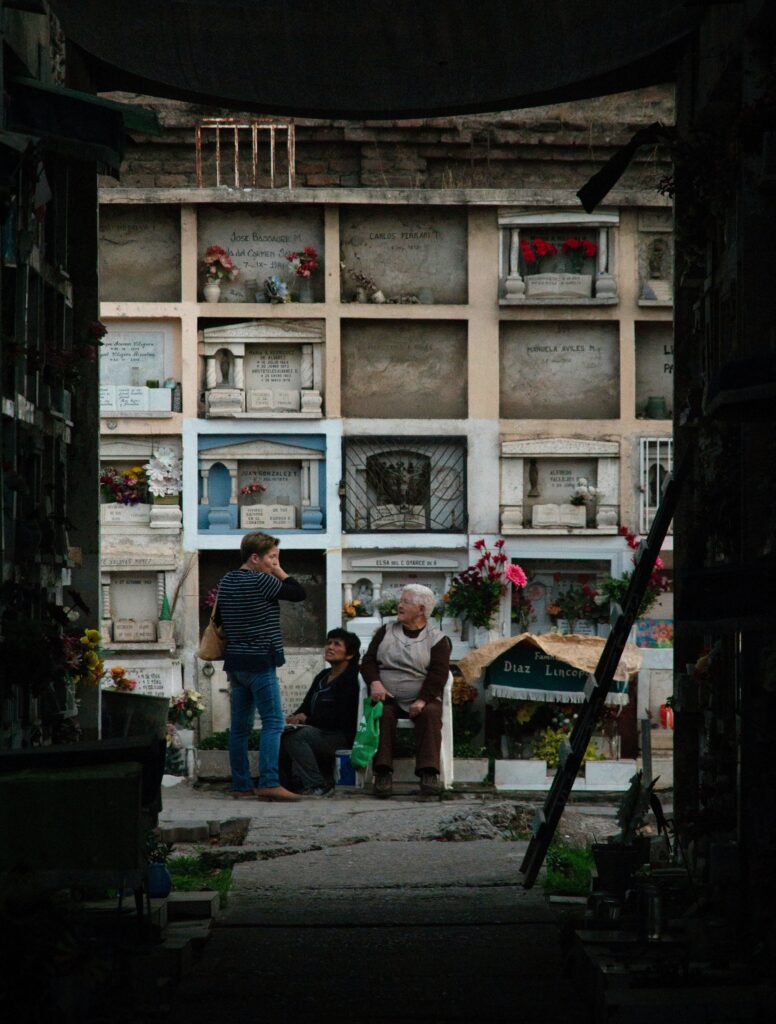
Three men in front of a wall of niches
Cemetery in Santiago, Chile (photo by I. Amenbar, unsplash)

Every culture must devise ways of attending to mortal remains. The Cemetery Research Group (CRG) takes an interdisciplinary approach in researching how emotional, religious and social concerns have been framed by economic and political imperatives.

Across the world, traditional practices have been gradually overtaken by the need to operate at scale, as populations move from rural to urban settlements. Dealing with the dead has become the purview of professional managers, planners and technological innovators. 

The highly charged significance of mortal remains means that societal responses to the dead can become points of coercion and conflict, celebrating or supressing identity. 

Scholars from around the globe are engaged in cemetery studies, broadly defined, and there is a substantial and growing bibliography.

Events and opportunities

Two new publications are now available: Tove Ingebjørg Fjell’s Death and Funeral Practices in Norway is the latest book in the series Routledge International Focus on Death and Funeral Practices. Brent Elliott and Roger Bowdler’s long-awaited text The British Cemetery is now out – listen to the authors being interviewed on the New Books Network.

Network member Eglė Bazaraitė is one of the curators of a new exhibition at Lithuania’s Vilnius City Museum, exploring the history of the Rasos Cemetery. Established in 1801, this is the oldest surviving cemetery in Vilnius. The exhibition, now open, is running until the end of the year.

Julie Rugg will be giving a lecture entitled ‘Funeral heritage and the challenges of sustainability’ at the Institute of Ethnology of the Czech Academy of Sciences in Prague on 24th September 2026 from 14:00 to 15:30 (CEST) [Seminar Room, 5th Floor, Na Florenci 3, Praha 1].  Further details are available. A link is available for anyone wanting to attend online.

The international workshop ‘The everyday heritage and afterlives of asylum burial grounds’, will be taking place online on Tuesday 27th October 2026. A full programme is now available. This is a free event, and tickets are available on Eventbrite. See further details in Events.

The second Virtual Cemeteries Colloquium will take place on 20th November 2026 and the call for paper is now open. Please submit your abstract using the google form here. The deadline for submission is 2nd October 2026. The event is free to attend, and tickets will be available via the CRG website from 6th October. Further details are available on the Virtual Colloquium page.

The Routledge series Accommodating the Dead is now seeking submissions. The series has issued a call for chapters on the subject Governing the Dead in the Megacities of the Global South.  The deadline for abstracts is the end of October 2026. Further details are available here.


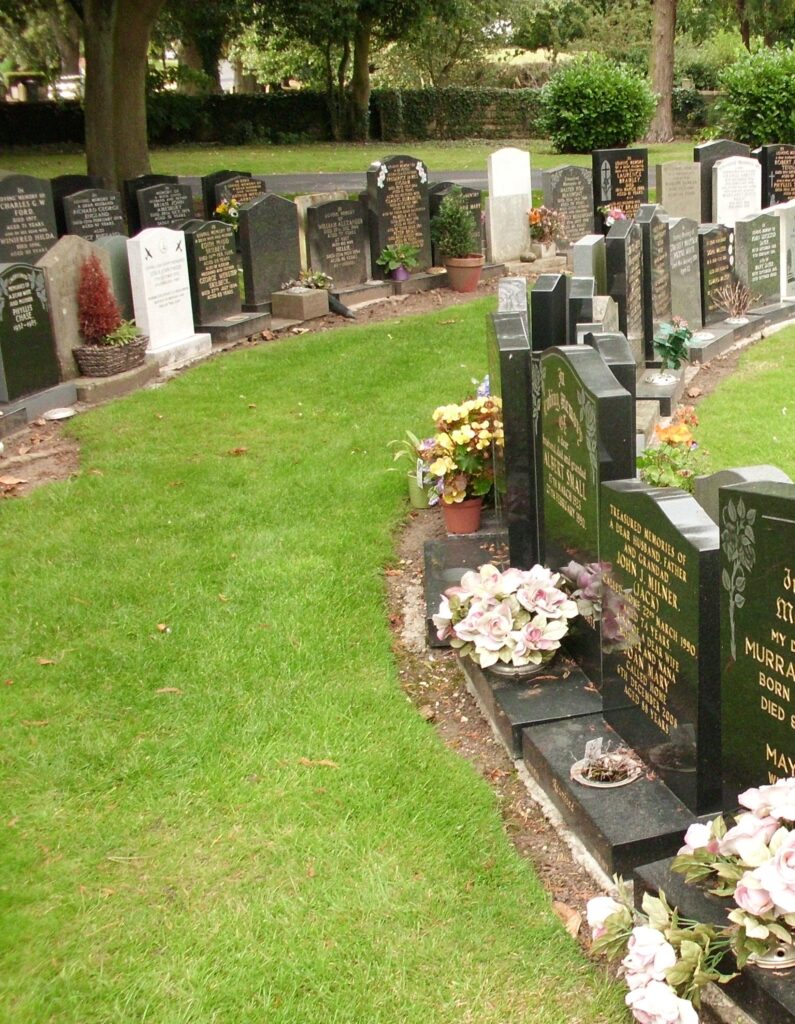
Two tightly-packed rows of headstones for cremated remains
Ripon Cemetery, 2013 (CRG Collection)

Frequently Asked Questions

How many cemeteries are there in the UK? How many people are cremated? What’s direct cremation all about, and what’s green burial? We have answers to frequently asked questions about funeral practices in the UK.

Survey

Gina Venneri, PhD candidate in Art History at the University of Salerno (Italy), is conducting an anonymous international survey as part of her doctoral research on the processes of re-signification that have shaped – and continue to shape – historic cemeteries.

Her research focuses particularly on Italian cemeteries of historical, artistic, and landscape value established between the eighteenth and twentieth centuries. In recent decades, some of these sites have increasingly been approached not only as burial grounds and places of remembrance, but also as cultural spaces, sites of social interaction, and laboratories for community participation.

The survey aims to explore how historic cemeteries are perceived, visited, experienced, and interpreted today, gathering perspectives from people of different cultural, geographical, and generational backgrounds. It also considers experiences of cemeteries beyond Italy, in order to broaden the comparative scope of the research.

No previous experience of visiting a historic cemetery is required to participate. The questionnaire is anonymous, is in England and Italian, and takes approximately 12–18 minutes to complete, and can be found here. Participation and further circulation of the survey would be greatly appreciated.

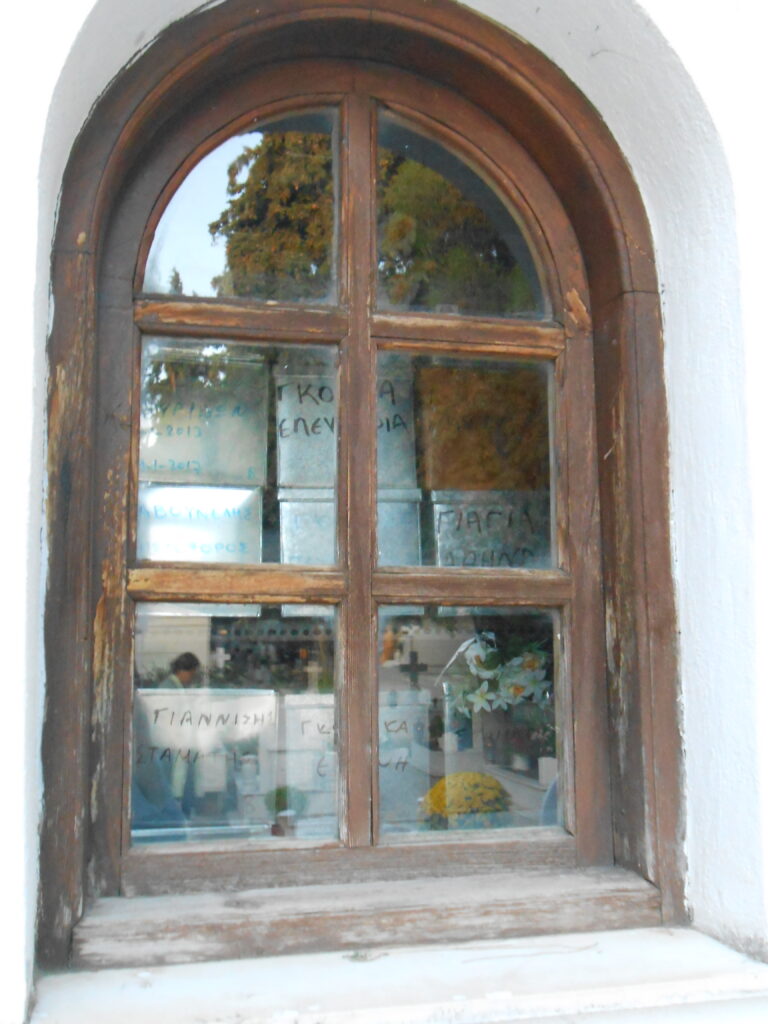
Arched window. The building is packed with tin boxes, each bearing a name.
St Tryfor Cemetery, Kifisia (Greece) [CRG]

Accommodating the Dead: Materialities, Rituals and Technologies

A new book series, published by Routledge and edited by Brenda Mathijssen and Julie Rugg has been announced. The series invites interdisciplinary and international monographs and edited collections on human responses to the materiality of the dead body.